

MESH Network
& TRILL
-
A Mesh network is composed of a radio transmitted text messaging system that can be accessed via bluetooth and a meshnode.
The acronym TRILL stands for Transparent Interconnection of Lots of Links, which is a way we hold dear. This isn’t your capitalist form of “networking.”
The idea of “Mesh network and TRILL” is to build a public communications infrastructure for Omaha, via solar powered mesh networks integrated into locally-owned businesses, little free pantries, and up in trees. -
• Currently, communication is commonly gatekept behind increasingly expensive sources. Mesh radios provide an inexpensive alternative. Just one upfront cost for the device, and that’s it - no monthly subscription fee’s!
• Mesh uses an encrypted peer-to-peer communication, meaning it is secure. Not under the watchful eye of Big Brother.
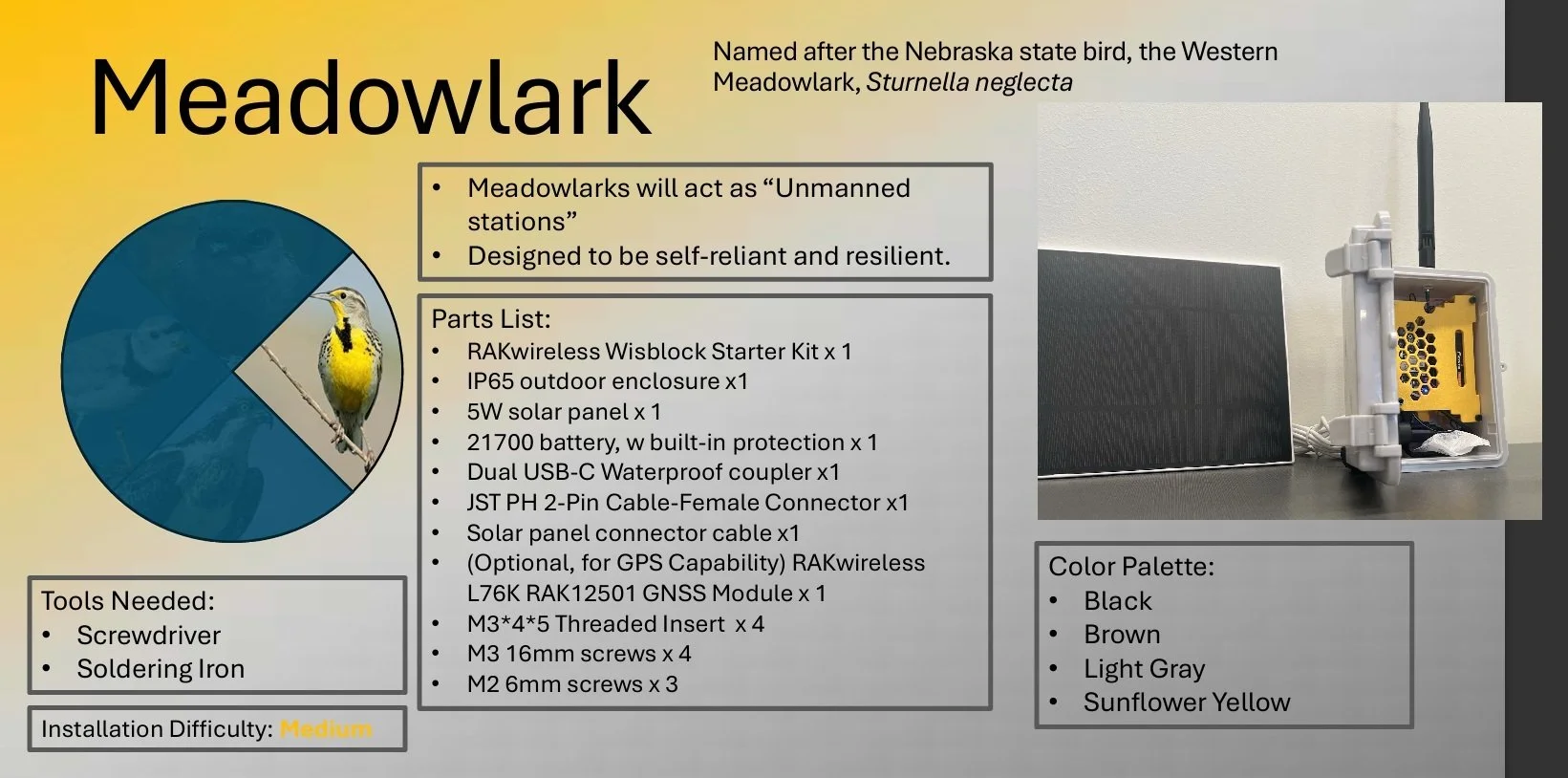
• Mesh radios are an energy efficient text messaging method. Our Meadowlark systems use such a tiny bit of electricity, that the whole network could be charged off of just 5-volt solar panels!
• In cellular dead zones, radios can still send/receive traffic.
• If/when we see rolling blackouts from oil/gas supply issues, or from a natural disaster, or blockages to the telecom system from an authoritarian government, remain in contact with your people.
If shit goes down, the Mesh network will stay up!
• If you keep the battery charged, you’ll always have access to free, modular, secure failsafe for text messaging technology. -
Our goal is to get these devices into the hands of as many people as possible.
We recognize the potential of mesh networks to create a redundancy that could become a lifeline in hard times. This includes our unhoused neighbors, and all other marginalized people who may not be able to keep up with a phone bill.
We envision this becoming a public communications infrastructure for Omaha and beyond.We are seeing Meshcore entering the cultural zeitgeist and becoming a popular alternative for digital communications.
-
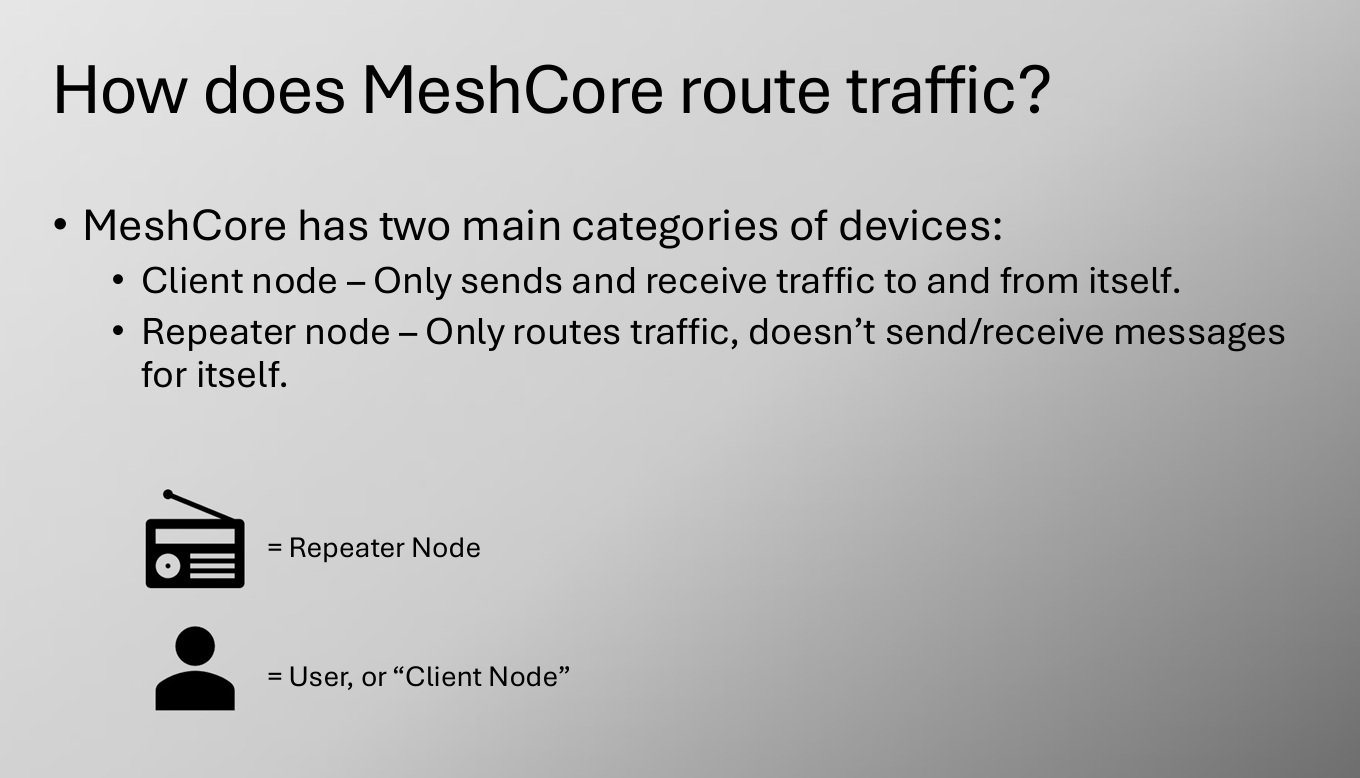
With a client-end node, which is akin to the cell phone in this network framework.
The client-end node can be a standalone device, with built-in screen and keyboard, or it can be connected to via a cell phone with bluetooth and a Meshcore app.
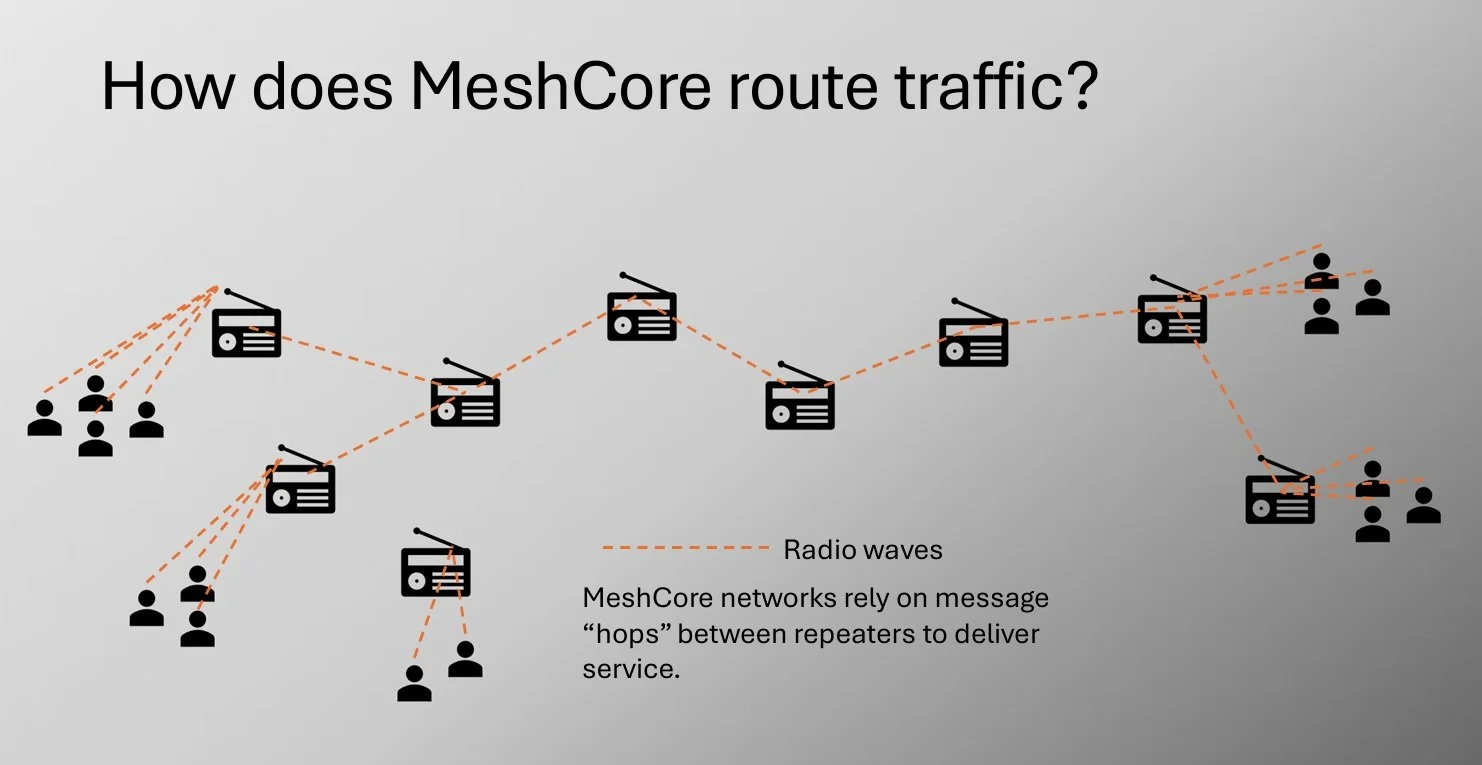
There are also relays aka repeaters. These are the radio transmitters that boost the signals across longer distances to send messages across the city.
-
Omaha has a robust Meshcore network already up and running. We currently have the ability to communicate with people out in Lincoln, Nebraska!
We seek to fill in the dead-zones of the coverage maps with repeater installations. Check out the NebraskaMesh Analyzer to see the logged node activity around the city. Omamesh.net is another great resource, along with their discord server for getting direct guidance with the setup.
FULL DISCLOSURE: We are not affiliated with NebraskaMesh.Net or OmaMesh.Net
We are simply building off the shoulders of these giants! We’re the noobs. They are the OG’s. Much of what we have learned has been through them.
The range of a repeater greatly changes according to many variables; geography, architecture density, antennae setup, elevation etc.So for example:
The downtown area is tough to get radio signals to travel around the buildings and therefore require a greater relay density.
Whereas, out in the suburbs where there is hardly any canopy cover or tall buildings, the repeaters have far greater range.Also antennae can be modulated to direct its power into a more linear path, giving it far greater distance.
-
We decided on using the WisBlock’s because they are the most energy efficient, which work great for holding a charge a very longtime.
Our experiment is still ongoing to see how long the battery holds without a charge. So far it has been months, with weekly usage on a 6,000mah battery, and it’s still at 77%!
-
Right now, we are trading the ones we build out at cost. This doesn’t include the labor, or the 3d printed housing from volunteers.
The portable client end nodes, which we have dubbed the “Swifts” average about $75 each. To make them solar-powered and weather proof for repeater installations, about $100. These solar-powered repeaters that we have engineered are named “Meadowlarks.”
We bulk purchase components and build them together during our Mutual Aid Community Exchange meetings. Check the community calendar to join us at one of our next MACE meetups.
We are installing repeaters at various host locations at cost. If there is a treepeater install that requires some technical climbing, we ask the homeowner cover a small toolkit maintenance fee for the wear and tear on the climbing gear.
You could also parlay a Meadowlark install in with a tree trim from Earth Sculptors at a discounted rate during the Winter. Check them out @ EarthSculptors.com“If it is not accessible to the poor, it is neither radical nor revolutionary”
-Jonathan Herrera SotoWe hope to eventually build enough momentum for this campaign that we accrue enough donations to start giving these away to our most marginalized neighbors, who stand to benefit the most from this public communications system.
We are currently pooling money for our next bulk purchase of MESH components. If you’d like a Swift or Meadowlark, please join us at a MACE meeting to discuss the logistics with us.
You can also send an email undeterred@mutualaidomaha.org to inquire about getting a Swift and/or Meadowlark.
ALSO! You don’t have to get one through us. There are many different mesh nodes available online.
****It is important to note that we are on the Meshcore network and not Meshtastic - two different softwares. **** -
This whole project was conceived at the Mutual Aid Community Exchange meetings, aka MACE meetups. This is where all the magic happens. We meet regularly to discuss this, and all our other irons in the fire, so as to forge the socialist infrastructure for a better world.
Community Fridge buildouts, Mesh Network and TRILL, as well as the Skillshare/Neighborhood Resource Map is just a few of the things we got going on.
Everyone is welcome. Regular attendance is not required. Pop in whenever you can!
We're laidback with snacks, finding the cracks in the capitalist racetrack.
The anti-capitalist architecture we build today will be the seeds for liberation tomorrow!
*************************************
You can find out when and where our next MACE meetup is on our community calendar.
***********************************We are seeing a phenomenal response to the publishing of this Mesh Network and TRILL page, therefore anticipating a lot of growth in the coming months.
We plan to eventually host more MeshCore workshops for collectivized assembly of components, instruction on use of the devices, and teach about the science behind it.
As we outgrow our normal meeting spots, we will need to start scheduling with larger free venues.
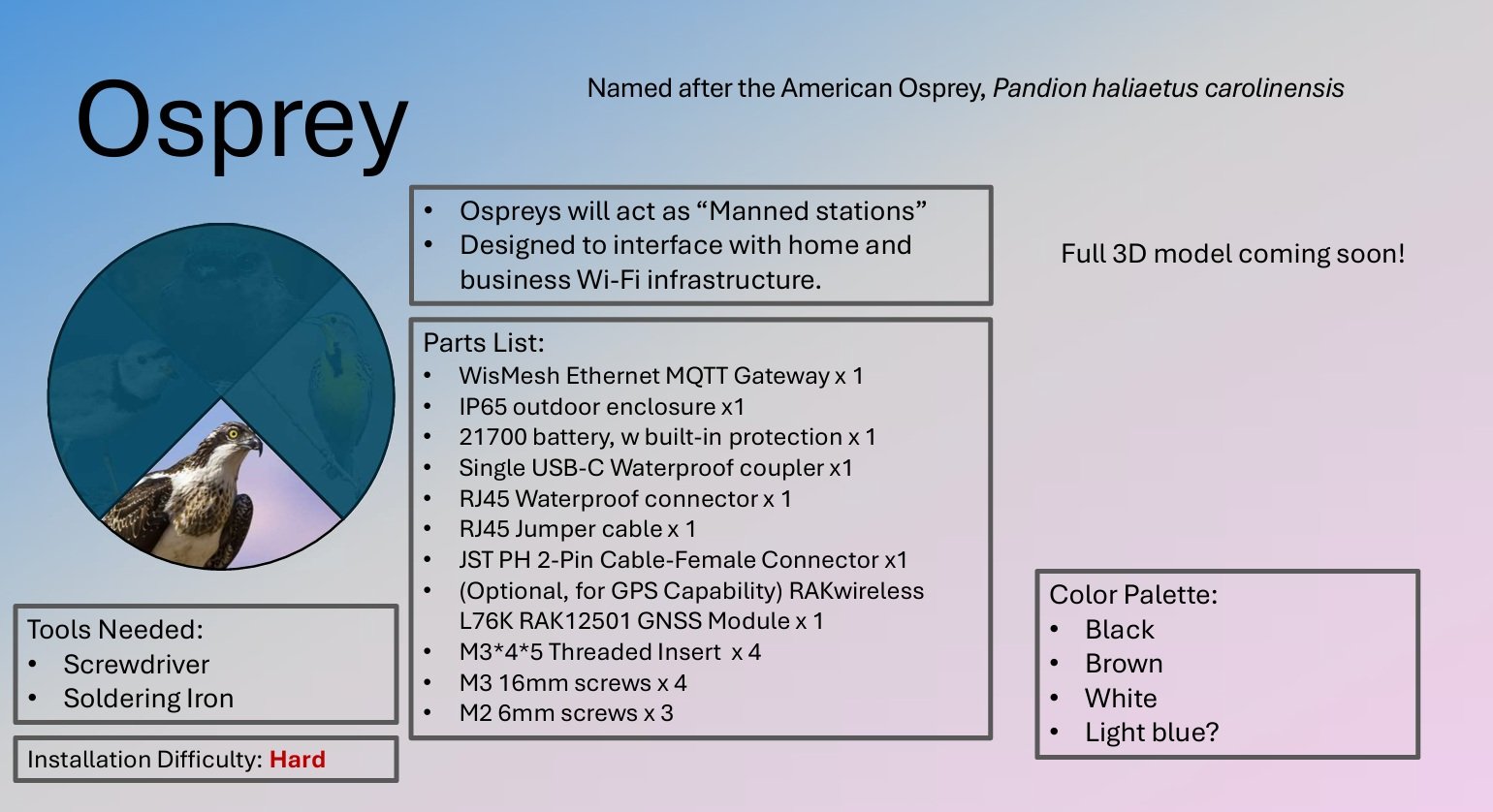
So, if you happen to own commercial space, and are willing to host at least 20+ person meetings for free, we will become the greatest promoters of your business! We would also thank you by installing an Osprey for free in your venue, if it is a public-facing area with WiFi. -
There are so many facets to this vision, and therefore roles to it being realized.
We need volunteers to 3d print our internal housing for the Meadowlarks, and the external housing for the Swifts. (The models are published up on Thingaverse, and the link will be posted on this page soon.)
We will need a lot of help assembling the components together after the next bulk order comes in. When that time comes, we will host a workshop to do this all together. Many tiny tools will need to be mobilized as well.
We need knowledgeable persons who understand how this all works to help table local events and answer questions and hand out zines about the project. Each one teach one model.
We will need many hosts of the meadowlarks to fill out the coverage density in the network. That is the primary goal here at this point; Buildout the network so that there is no remaining pockets of dead-zones within the Omaha city limits. Of course, anyone in the metro area is welcome to host a Meadowlark as well!
We will use any surplus donations to give away Swifts to marginalized people in Omaha area who stand to benefit the most from being able to communicate without cost. Not just our unhoused neighbors, but people who need to coordinate rideshares due to disability and/or poverty.
We need more trained and experienced climbers willing to volunteer their skillset in getting the Meadowlarks installed into trees. We would ask for you to sign a waiver to avoid any liability too.
We need more mesh aficionado’s to visit with us as a group and teach us the finer technical aspects of MeshCore.
We need more instructional designers to help us digest all this information and present it in the most palatable forms.
We need to find larger meeting spaces soon for the MACE meetups, so we can scale up with low overhead. Looking for some local business owners willing to host 25+ people at a time for our Mutual Aid Community Exchanges, in 10/11 day intervals. We will become your greatest promoters in return, and install an Osprey node for free as a thank you!
We have developed four different mesh node devices, based on different functions.
The two main ones are:
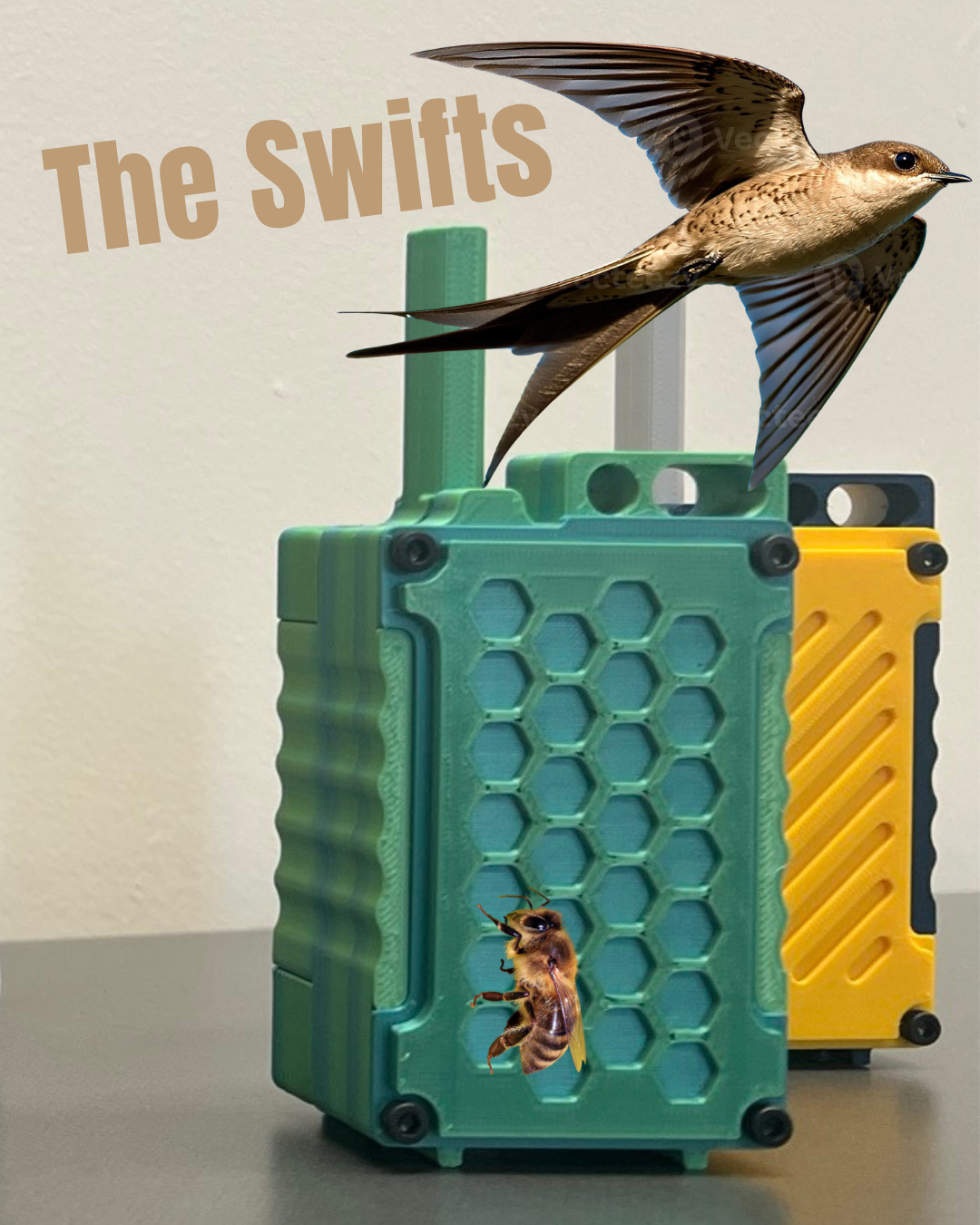
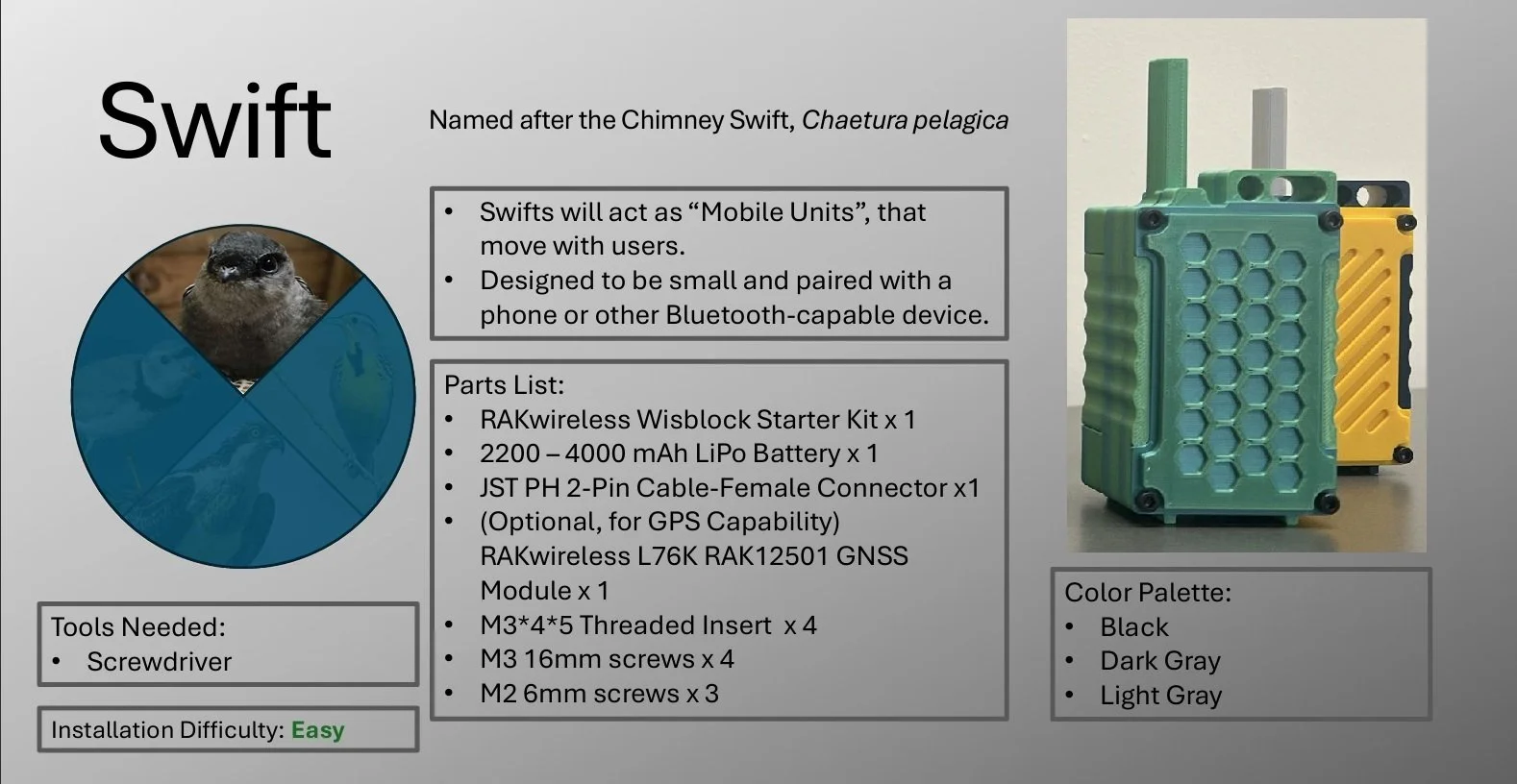
The Swifts are the portable mesh node units, which functions like the cell phone in the mesh network. These function as ‘client-end nodes’ which mean they produce an address to directly send messages to.
We have built some with 4,000mah and 2,000mah batteries. The smaller battery has the advantage of being cheaper to produce, and a much smaller device.
The Swifts pictured above contain the 4,000mah batteries.
These can hold a charge for weeks, and even months depending on how often it is used.
To use this device first download a Meshcore app onto your phone. For Apple products we recommend “Meshcore-One,” for Android “Meshcore.” Once you have the app you can connect to your Swift using Bluetooth. Once connected the factory default password is “123456.” After typing that in you will begin the setup of your device. We recommend you change the password to your device to prevent others from commandeering it.
Once your Swift is setup you can begin sending messages to others within your network. As of 08/30/2026 there are about 20 swifts out in the wild now.
There is also a public channel to communicate with others within range. It is akin to the early internet, AOL chatroom days, for all you elder millennials out there.
We are making the STL files freely accessible for anyone wanting to print their own housing for the Swift device at home! RAK Wireless Wisblock Case - "Swift" by Peacoat - Thingiverse
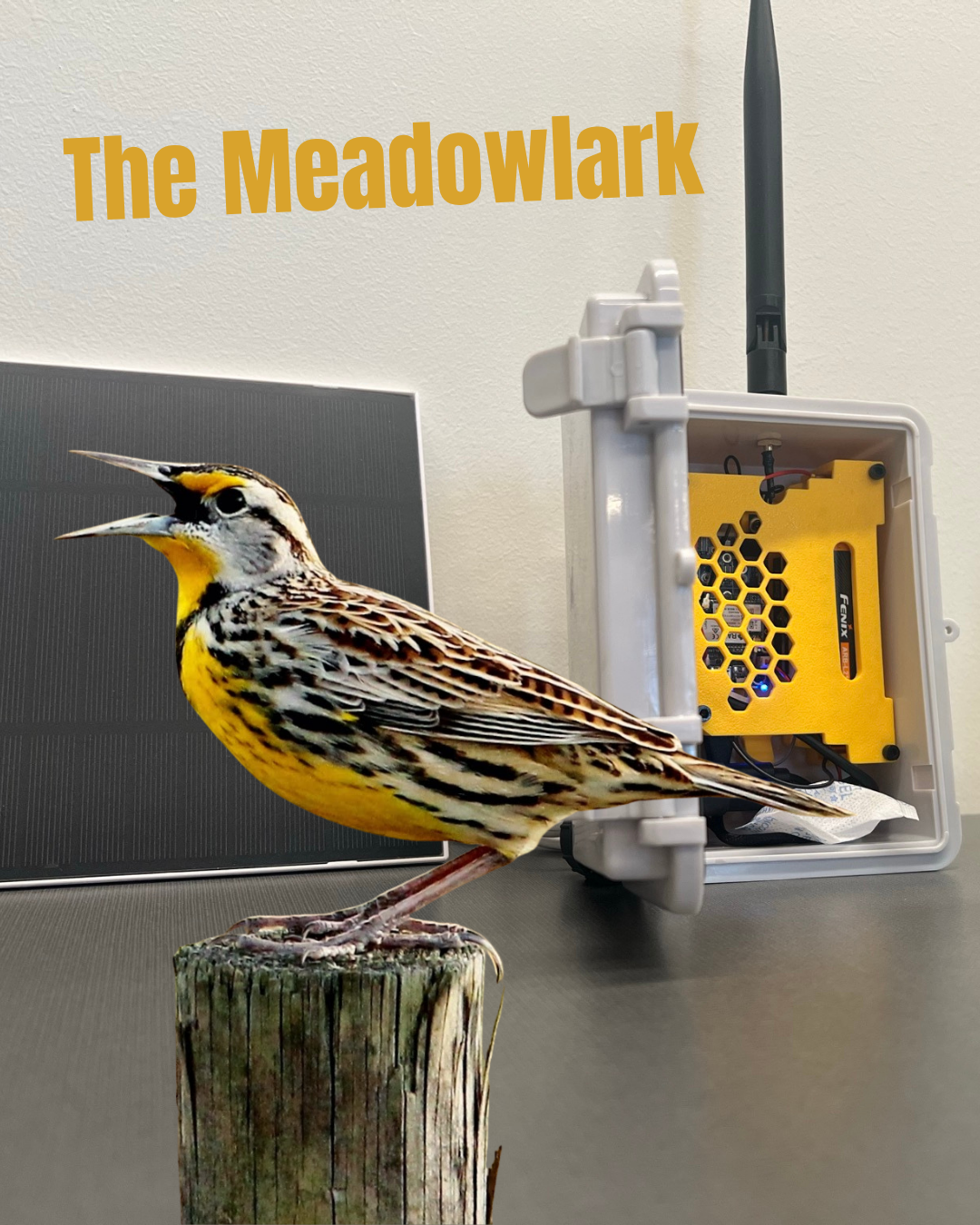
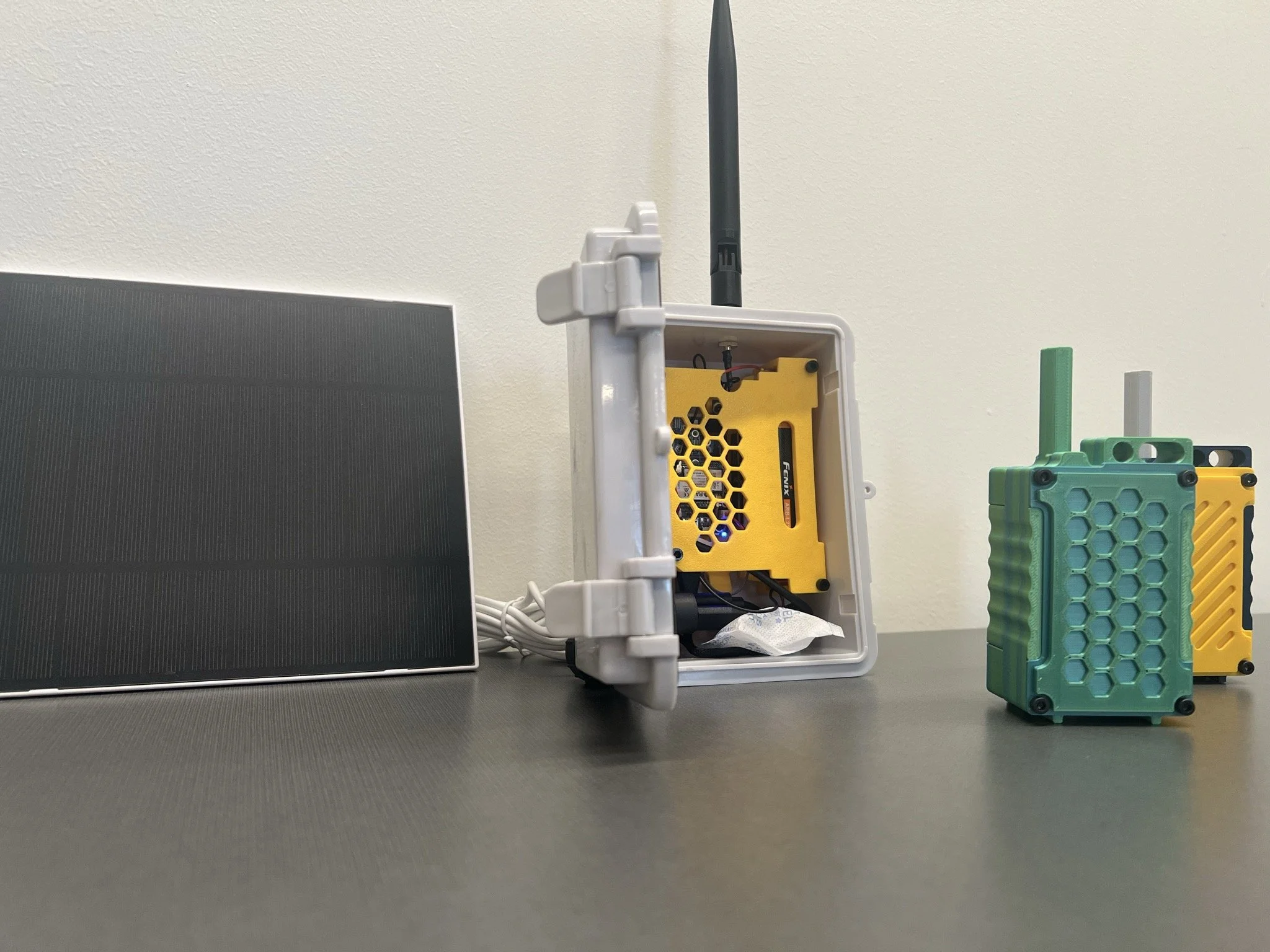
The Meadowlarks are the solar-powered mesh nodes that act like the cell-phone towers within this framework. They are affixed up high so that the radio waves can travel further. We make sure to not attach them too high so that the bluetooth capabilities are still within range. They also need to be maintained with software updates occasionally, so there are different strategies at play to make that accessible.
The Meadowlark function as ‘repeaters’ which mean they relay all messages within range and send it out into the next nearest nodes so that the message reaches its intended recipients.
We have built these out with 6,000mah batteries to give them an adequate storage capacity for disruption to the solar cell, hot and cold extremes etc.
These are still in the testing phase, and we are likely to make updates in response to different fail points. We have already had to update our 3d printing materials withing the housing because one of them had warped under extreme heat under the windshield sitting on a dashboard through the summer.
An interesting factor with the updated software on Meshcore is they are now capable of switching from repeater to client end nodes without having the flash the firmware. Its as simple as toggling a switch within the control panel of the app,
This versatility of function is an exciting development because this halves the concentration of nodes needed to build out a robust network density.
Here is the STL files for the “Meadowlark” internal housing:
RAK Wireless Wisblock Case - "Meadowlark" by Peacoat - Thingiverse
Notes from Peacoat: STL files go into a slicer software, and then that software kicks out a file that the printer can read (.3mf files, or .gcode work)
[Thingiverse files] -> STL -> [slicer] -> .3mf/.gcode -> [printer] -> sexy radios
Not Pictured Yet:
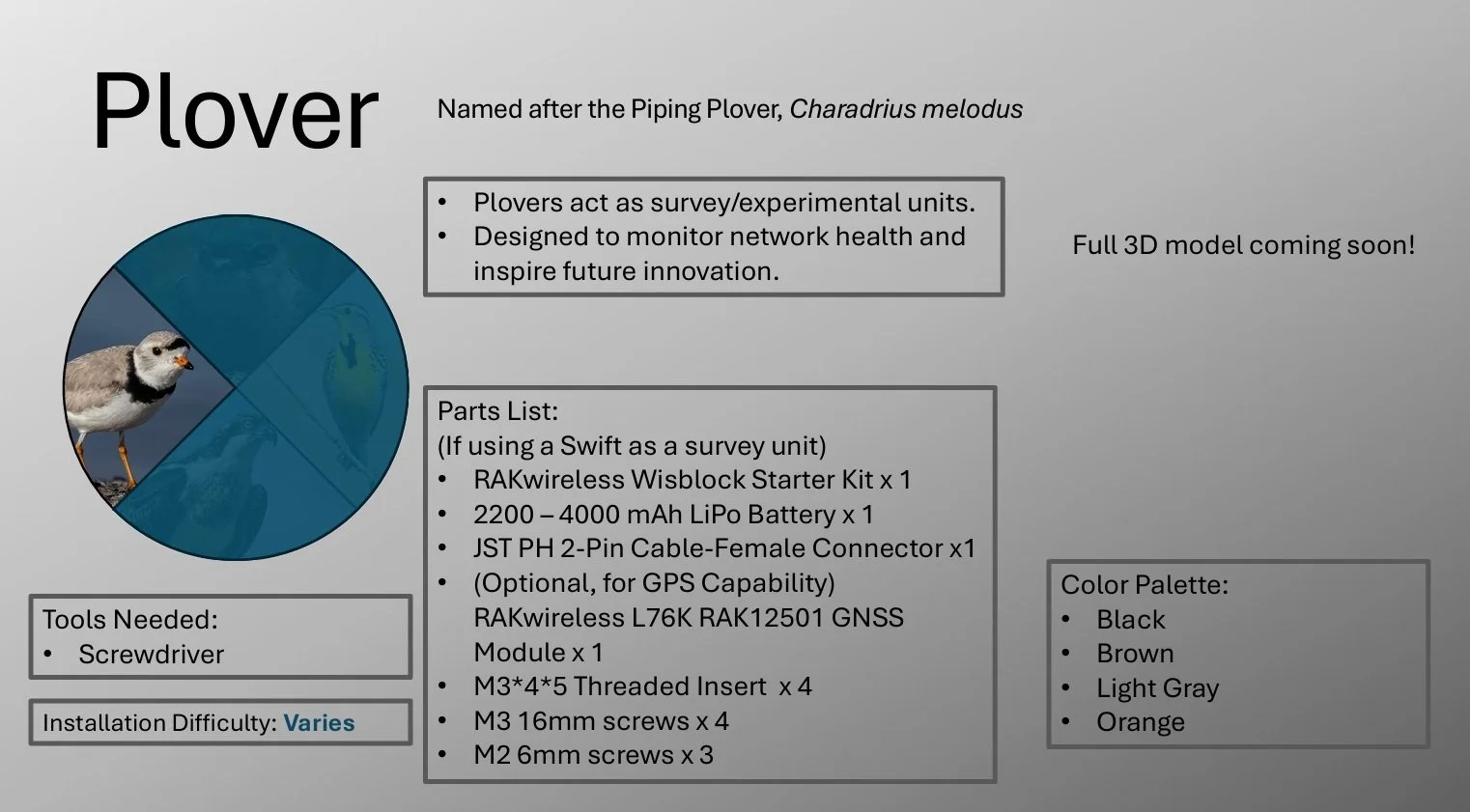
The Plovers - The experimental meshnodes used to monitor weather, temperature, humidity, soil moisture content for automating irrigation systems in our gardens , etc.
The Ospreys - The Wifi enabled meshnodes used inside of public areas, such as salons, cafes, grocery stores, bike shops, food pantries, etc.
These work like wide-scale Meadowlarks that can transmit a higher concentration of messages from individual client-end nodes indoors. They are funneled from a WiFi router and transmit to the next nearest relays outside.
We have several different potential hosts queued up for the first installation of these devices. We are always looking for more. We only ask that the hosts cover the costs of the devices, not for the installations.
The primary focus of the ‘Mesh Network and TRILL’ project is to build out and install Meadowlarks and Ospreys all over the city, to expand the reach of the network. Client end nodes are easy to purchase prebuilt online, but the infrastructure for the Meshcore network still requires a lot of development to make it as reliable as a cell phone network.
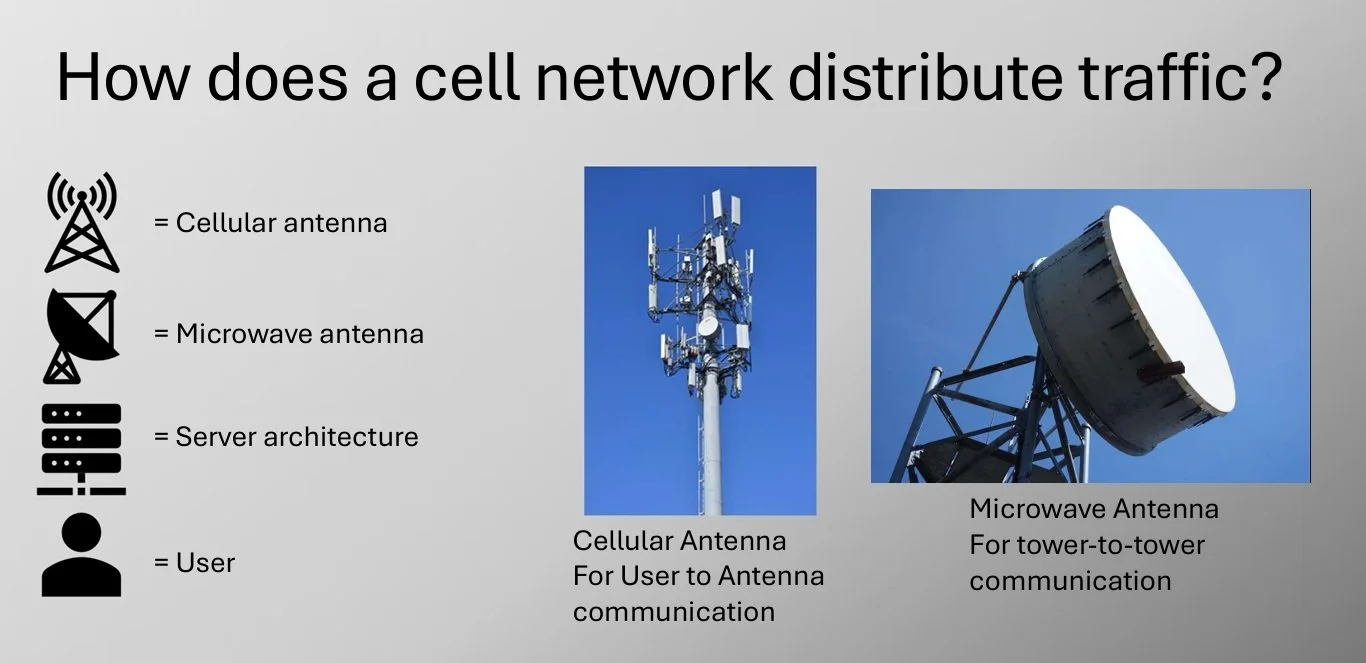
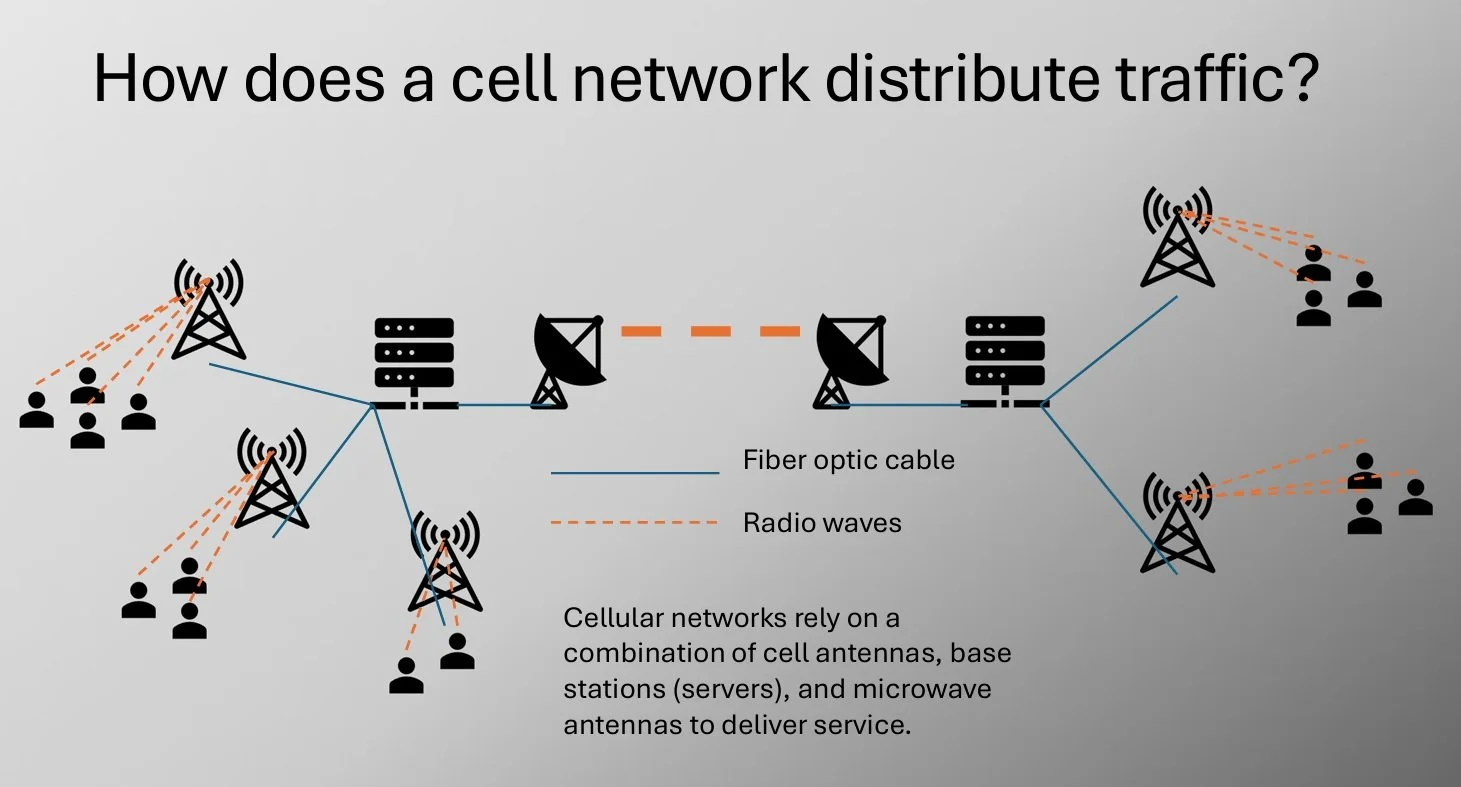
Mesh Network & TRILL Infographics/Parts List:
If you’d like to build your own here are the purchase links.
***Important note***
Importing the radio kits adds a 25% tariff upon delivery. The website says something about staying under certain total limits to avoid that, despite our best efforts we’ve been hit with the tariffs every time. So be prepared to pay that upon delivery. Otherwise, the package gets sent back to Hong Kong!
Radio kits
• WisMeshEthernet MQTT Gateway (Hardware for the Osprey)-
https://store.rakwireless.com/products/wismesh-ethernet-gateway
• WisBlockStarter Kit (Hardware for the Swift, Meadowlark or Plover) -
https://store.rakwireless.com/products/wisblock-starter-kit
We use the “RAK19007+RAK4631 LoRaWAN and LoRa Nordic nRF52840 BLE Core with Arduino” & be sure it is in the US915 frequency band. This link also allows you to add the optional GNSS GPS Location module (L76K), and the necessary battery connector, and solar panel connector cables (for meadowlarks) to your cart.
Power Sources
• 21700 battery, 6000 mAhcapacity, built in protection -
Fenix ARB-L21-6000B Rechargeable Battery & Power Bank - Fenix Lighting